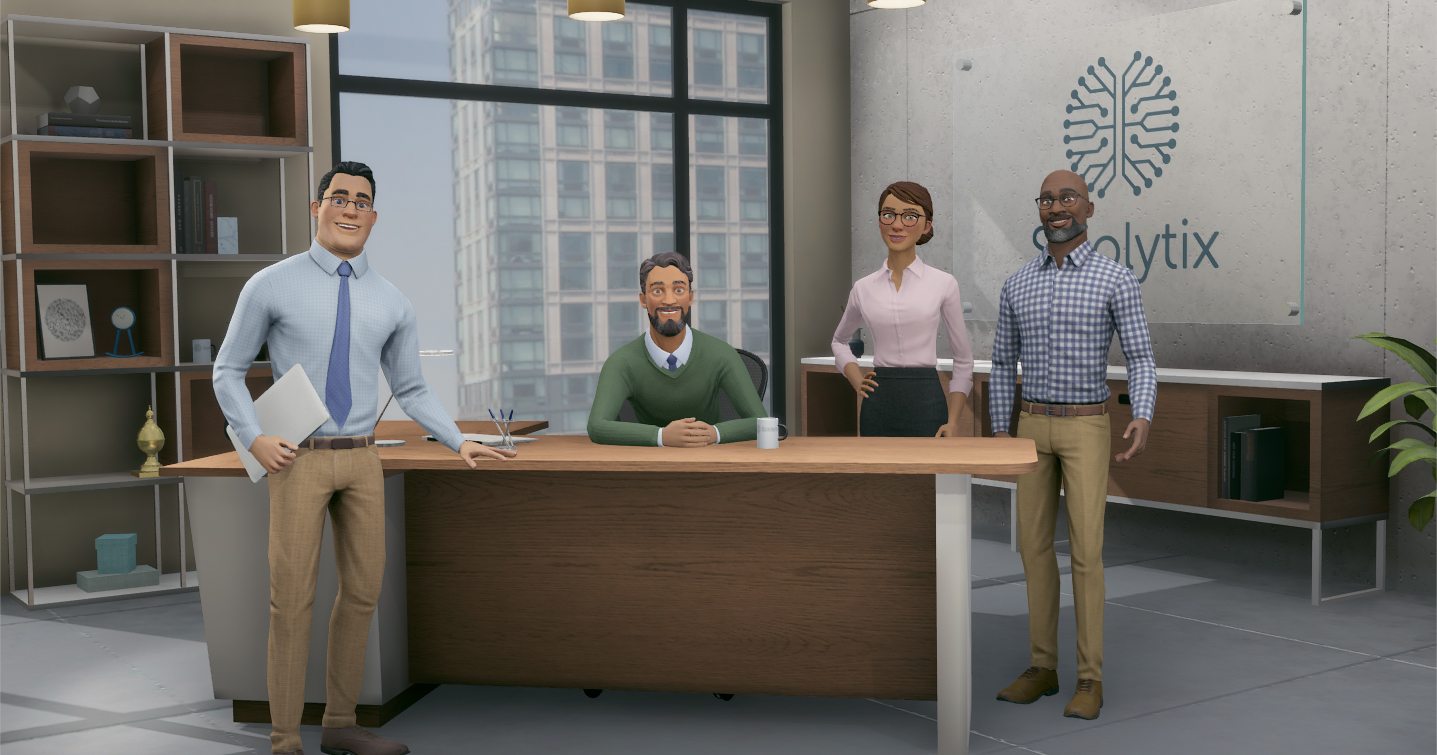
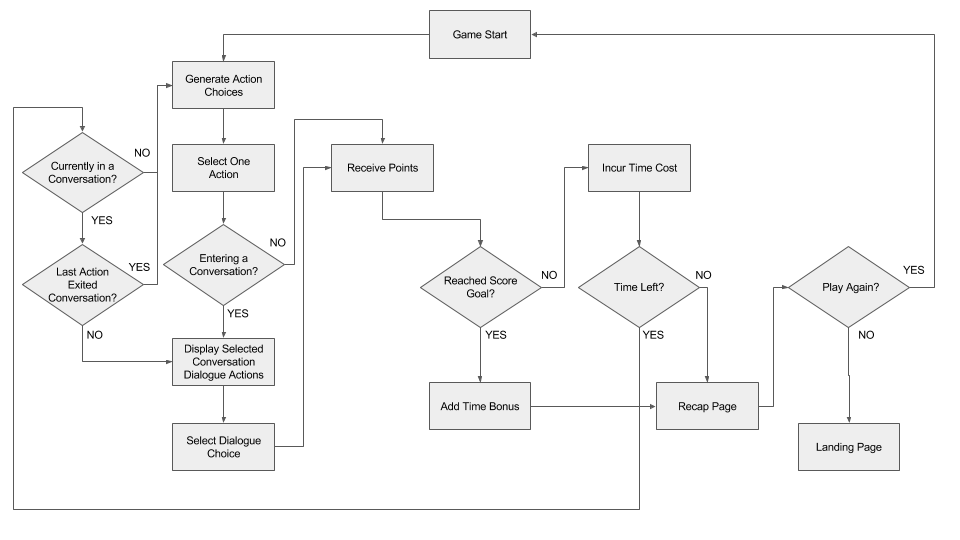
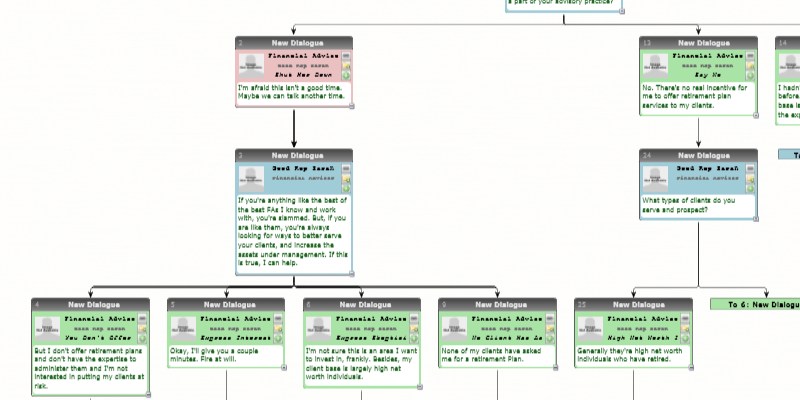
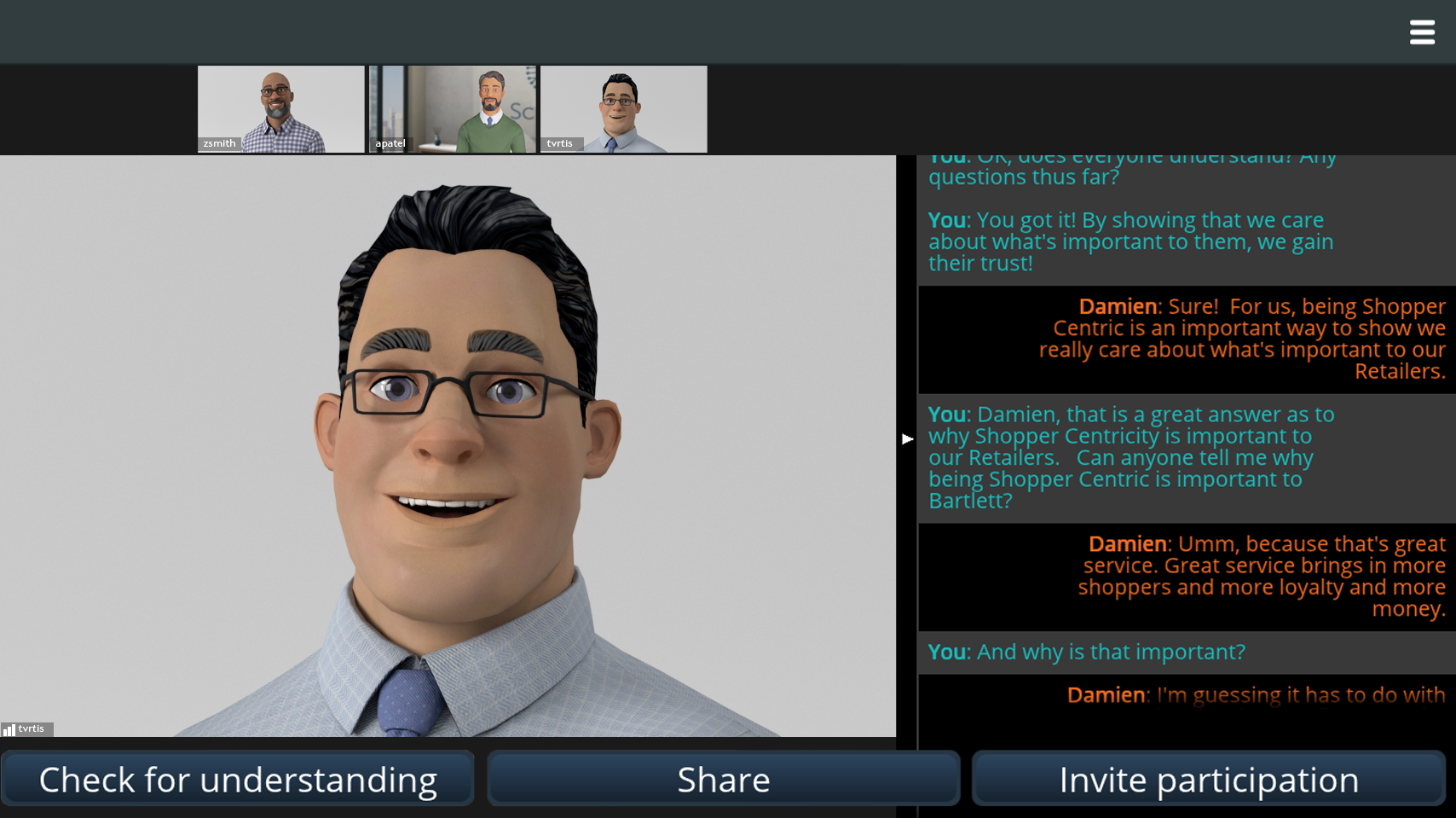
The ImpactSIMS were a series of over 75 custom training sims that used non-linear narrative pathing and the Unity game engine to let users explore different types of scenarios in safe, consequence-free environments. One client wanted to just lease our assets and develop their own versions of the sims. We warned them of the complexity but after they assured us it was totally, 100% okay, we agreed. Three months later, it was, unfortunately, not 100% okay. They were weeks behind schedule, and still not fully up to speed on the software required. Worse yet, they blamed our company for not fully informing them of the steep learning curve in production.
I was metaphorically parachuted in to take control of the project and repair the relationship. I needed to earn the client’s trust, both in me and the company, and come up with a plan overnight (literally) to get the simulations back on track to hit their original deadline.
I spent my first day speaking with the client, documenting all of their concerns, troubles, and complaints. This alone went miles to repairing the relationship as the client saw that I was not only listening, but also taking their frustrations seriously. I then got an accounting of the progress on all of the tasks, even the ones that were considered finished. This allowed me to put together a detailed list of action items. From there, I broke down the tasks in order of priority and complexity, as well as identified which ones could be worked on in parallel. With a full sense of what we had to deal with, I then made the hard calls of which features actually were must-haves for our MVP and which ones, no matter how cool they were, were just “nice-to-have.” The tasks that fell into the latter category were then pushed into a post-launch patch, and all of their development went into finishing the sims.
Thanks to the hard work and deep talent of the client, we caught up to the original schedule, delivered all of the promised simulations on time, and followed up with a patch shortly afterward with the final “polish” tasks. Not only were the users able to fully use the sims on launch, but when the post-launch patch arrived, the users were even more excited, because they had already gotten used to the sims, and now, with the patch, it felt like a free upgrade just two weeks in. The client was so impressed that we continued to build simulations together for years afterward. …Although from that point on, they let us handle all of the development.
Associate Chair of Game Design
Halfway through my first year at NYFA as the Associate Chair of Game Design, the admissions office contacted me with a troubling discovery: due to a mistake on paperwork from the previous year, the Game Design program had been set up with too few credits to meet graduation requirements. This meant the current class of 20 students would be short 80 hours, each. To make matters worse, the schedule had already been set for the rest of the year, so any sudden changes (like, say, suddenly adding an extra 10-15 hours each week for the rest of the school year) would force many, if not all, of the students to drop as they had already arranged their personal schedules around the classes.
I needed to find a way for every student to make up the missing hours, but without changing the schedule in such a way that it would force them to withdraw. And ideally, without them even knowing, because withdrawal at that point would mean no refunds on the tuition, which would inevitably lead to a series of angry letters from the parents and a massive hit to the school’s reputation.
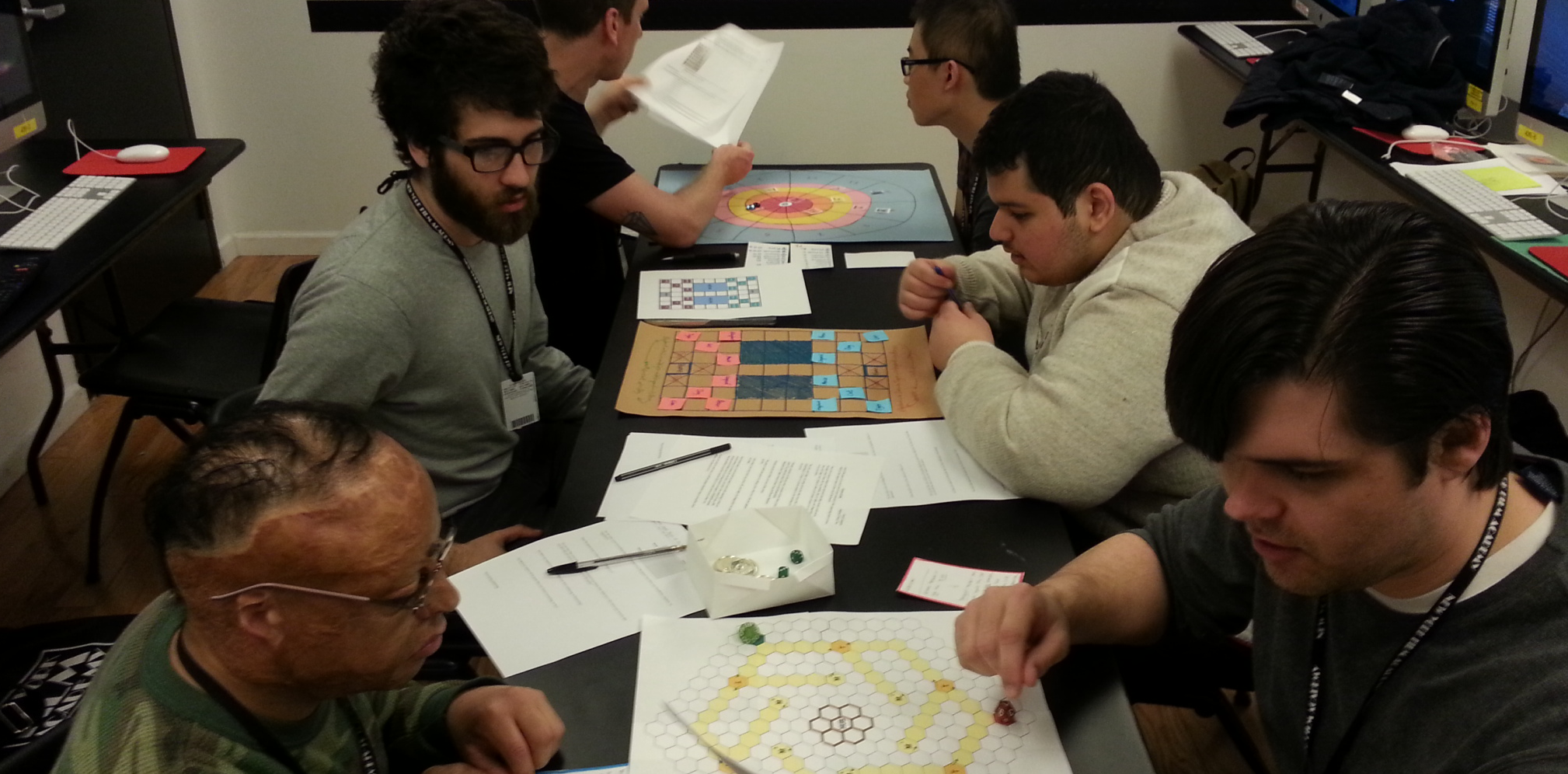
The major advantage I had is that I knew that the students already had the hours from their lab time. But, because of the error, those hours had not been counted. After conferring with the admissions office and the other department chairs, I discovered that I could count those hours if I had a series of extra-curriculum labs at the school where I was present. All the students had to do was, in class, tell me that they would be working at home for their lab hours prior to the days I was holding them, and they could be officially recorded. Hence, I created weekend lab hours, and had the students confirm to me prior that they would be working at home during that time. This allowed me to count the student’s prior lab hours each session until everyone was all caught up.
By the end of the semester, every student had caught up on their hours and was cleared for graduation. The beauty of the solution is that it did not impact the students in any way, allowing them to focus on their work. And perhaps more importantly, I was sure that all of the paperwork for the next year was properly filled out.
Successful Kickstarter Launch
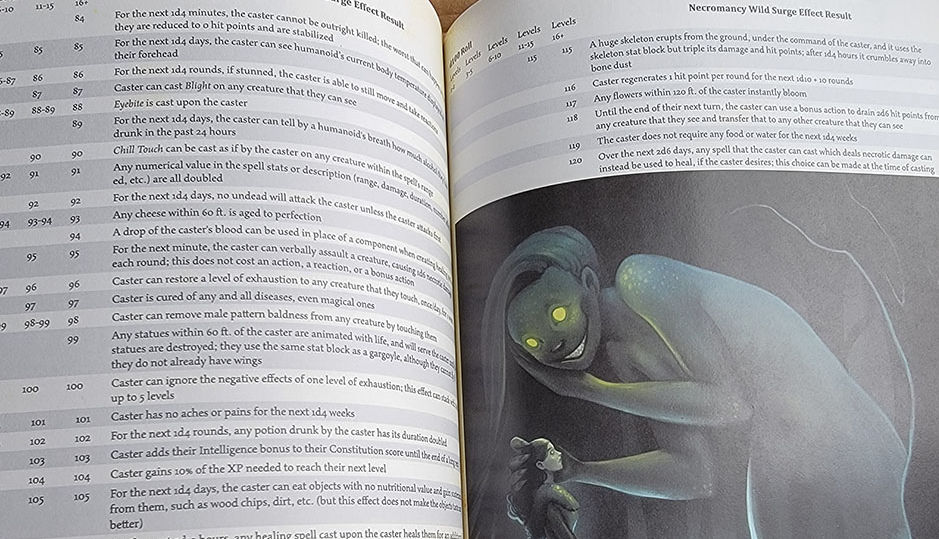
As a passion project, I had completed a rules supplement for the D&D 5th Ed game system, and was ready to make it available on DriveThruRPG, but I realized that I would need to raise money to commission some original art for the book. I had some of my own work in place, but not nearly enough.
I wanted to launch a Kickstarter that would raise enough money to cover the cost of the new artwork, as well as the production costs for putting the book together. I would need to put together an appealing page, a incentivizing set of rewards, and a snappy launch video.
I researched the Kickstarter process thoroughly, checking out several campaigns that worked, some that didn’t work, and across the spectrum in terms of campaign goals, from millions of dollars to just a few hundred. I mapped out a four-week campaign, created all of the page assets myself, including the launch video. I then promoted the project through social media, blog posts, and a bespoke Discord server for the backers. I actively engaged with people, answering every comment, email, and post as soon as I was able to. On the discord and in the backer comments, I had discussions with the community about ways to improve the final project, taking many of their suggestions into account, including the decision to offer the book as both a digital download as well as a physical copy.
The campaign finished at 180% of its funding goal, backed by over 200 people. The funding allowed me to commission and/or license 30+ pieces of original art, create a high-quality print version, and launch it on time (something of a rarity for Kickstarter projects).
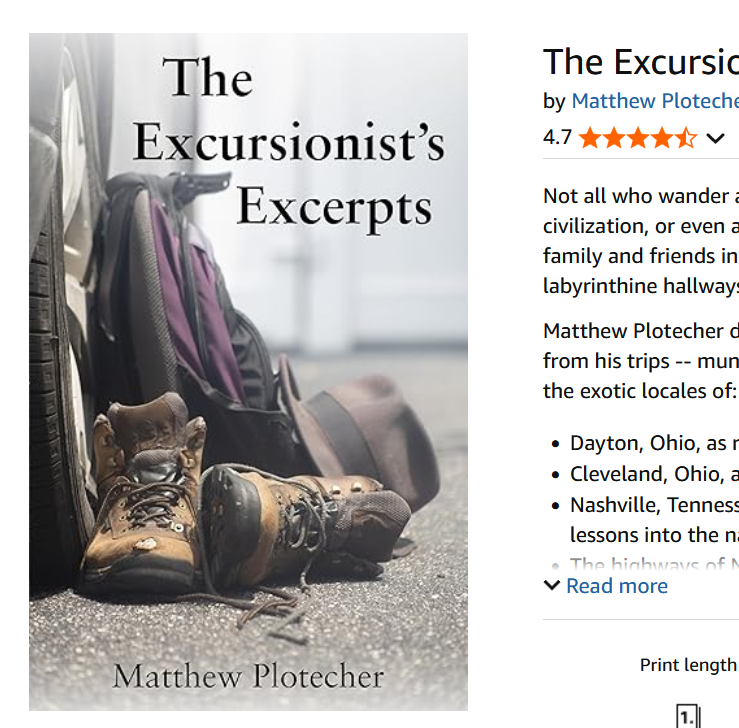
The Excursionist's Excerpts
I had prepared a draft manuscript that I wanted to publish in time for Black Friday so it could be available as a holiday gift option. However, It was already early August, giving me only three months to finish all of the prep work, including researching where to publish, properly preparing the manuscript for both eBook and print, and setting up a launch party. And all on a shoestring budget, as well as only during my free time.
I needed to account for every stage of the publishing process, including formatting, cover design, and researching ISBN requirements and selecting the best platforms for self-published authors. In addition, I had to build in hard deadlines as if I was going to release on Black Friday, I needed to give myself time for the proof copy to be made, delivered, and then make any changes I needed.
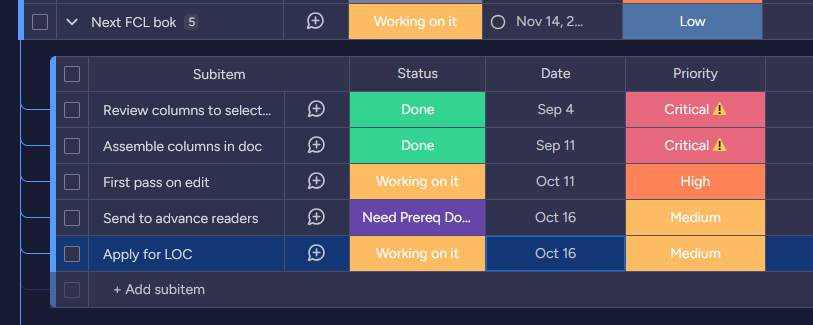
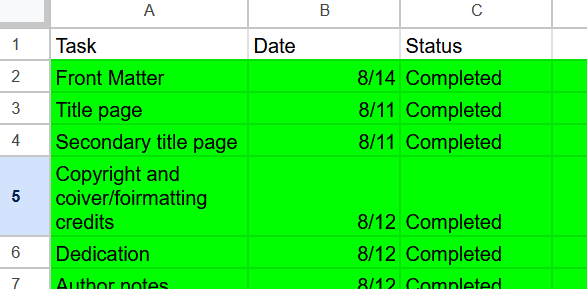
I built a detailed schedule that broke the work into a clear timeline, complete with milestones, dependencies, and deadlines. By researching the self publishing process, turnaround time for ordering proof copies, and distribution channels, I was able to properly estimate the time each task would take, when I would be able to complete certain tasks, and the dates I needed to hit in order to have the book available to order by Black Friday. I worked backwards from the release date, building in a few extra days in case some unforeseen event erupted. Then, each day, I made sure to tackle each task for the day, and if I had extra time, to get started early on the next tasks in the queue. Given that this was a solo project, I had to maintain a high level of focus and dedication to make sure that I didn’t slip.
Not only did the book launch on schedule, but I had gathered a small community ahead of time that joined me in a Facebook event for my book launch. Despite no marketing aside from word of mouth, I sold over 50 copies during that first week, ranking me in the top 10% for new authors with no previous publications or previously established communities. My book, “The Excursionist’s Excerpts,” also received multiple positive reviews and currently holds a 4.5/5 star rating on Amazon.